
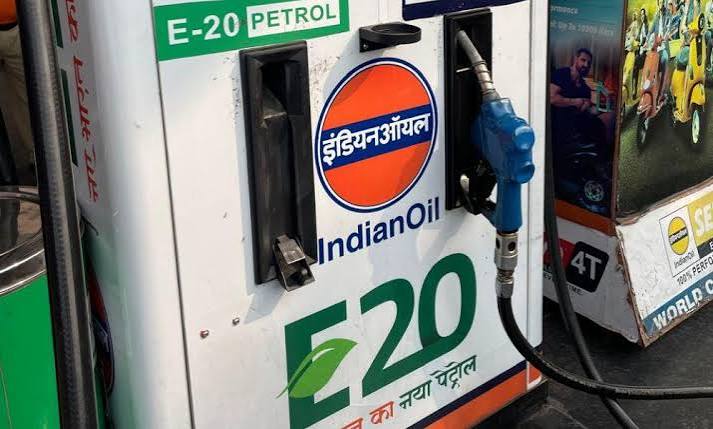
More than 20 crore two-wheelers and over 3 crore petrol cars, including a large number of older vehicles manufactured before E20 certification, have been operating on these fuels without any verified evidence of widespread engine failure or vehicle breakdown attributable to ethanol blending,said Gopi.
New Delhi:The government has not yet decided to raise ethanol blending in petrol beyond the current 20 per cent level, Minister of State for Petroleum and Natural Gas Suresh Gopi told the Rajya Sabha on Monday, adding that any future increase would follow further scientific study and consultation with industry.
“So far, no decision has been taken by the government for increasing ethanol blending with petrol beyond 20 per cent,” Gopi said in a written reply to a question. Any move higher would come “only after detailed scientific and technical studies and consultations with all relevant stakeholders, including automobile manufacturers, Oil Marketing Companies and research institutions,” he said.
More than 20 crore two-wheelers and over 3 crore petrol cars, including a large number of older vehicles manufactured before E20 certification, have been operating on these fuels without any verified evidence of widespread engine failure or vehicle breakdown attributable to ethanol blending,said Gopi.
The minister said the transition to E20 “has been phased, calibrated and evidence-based,” with ethanol blending increasing progressively from 1.53 per cent in 2013-14 to 20 per cent in 2025-26 after “scientific evaluation and stakeholder consultations at every stage.”
According to the written reply, before each increase in ethanol blending, studies were conducted in consultation with NITI Aayog, the Automotive Research Association of India (ARAI), the Society of Indian Automobile Manufacturers (SIAM), the Indian Institute of Petroleum (IIP), Oil Marketing Companies and automobile manufacturers.
These included laboratory testing, durability trials and field validation covering engine durability, fuel systems, corrosion resistance, drivability, emissions, fuel efficiency and overall vehicle performance.
The minister added that manufacturer service data also supports these findings.
“One leading four-wheeler manufacturer serviced 2.84 crore vehicles during FY 2025-26, including 1.5 crore older, non-E20-certified vehicles, without reporting any vehicular damage attributable to E20 fuel,” informed Gopi.
Similarly, “one leading two-wheeler manufacturer reported, based on extensive service data, no higher incidence of damage in vehicles operating on E20 compared with earlier fuel blends,” he added.
On fuel efficiency, the government said mileage depends on factors such as driving conditions, driving habits and vehicle maintenance.
The reply stated that “any reduction in fuel economy in certain older E10-designed vehicles is generally limited to about 3-5%, while E20 offers a higher octane rating, superior anti-knock characteristics, cleaner combustion and smoother engine operation.”
Gopi said India reached the 20 per cent blending target five years ahead of schedule, with average blending rising from about 1.53 per cent in 2013-14 to 20 per cent in the 2025-26 supply year, after more than two decades of phased rollout.
Since 2014-15, he said, the programme has saved over Rs 1.97 trillion in foreign exchange, displaced nearly 316 lakh tonnes of crude oil, avoided about 952 lakh tonnes of carbon dioxide emissions, and generated more than Rs 1.66 lakh crore in additional farmer income.
The minister said the government had received no “widespread or substantiated complaints” from vehicle manufacturers, automobile associations or consumer groups over engine failure, fuel-pump problems, corrosion or water contamination linked to E20 fuel, though it had taken note of concerns raised in media and on social media and examined them scientifically.