
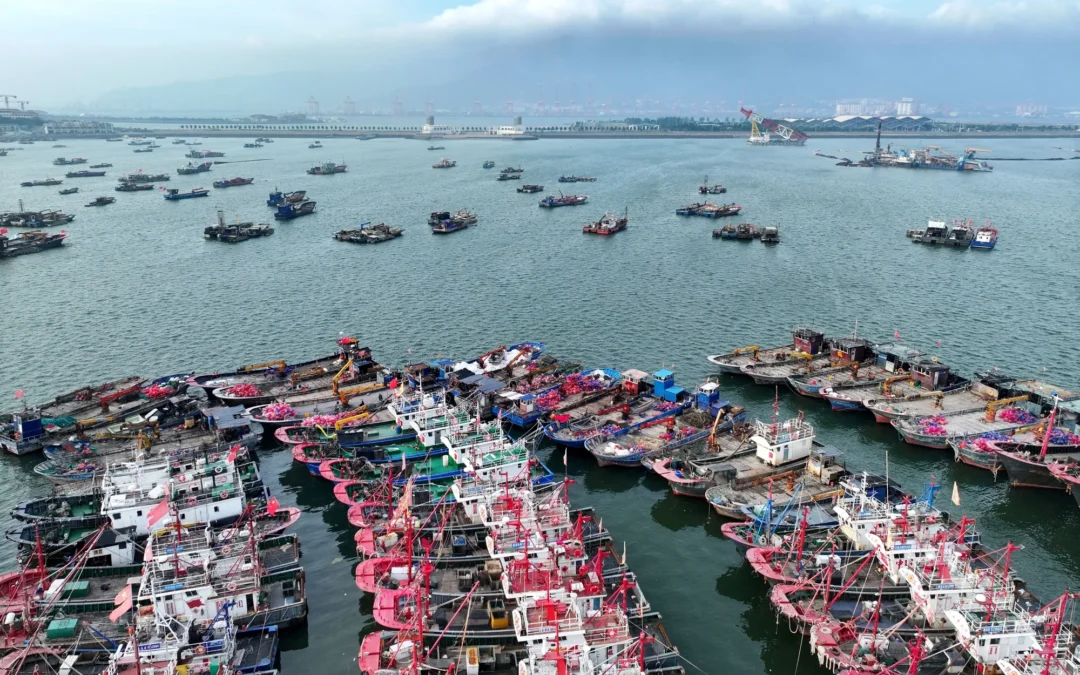
In its latest midsummer outlook, the National Climate Centre forecast that as many as six tropical cyclones would hit China this summer, a higher number than average. These storms “are expected to be strong overall” and to affect mainly coastal areas of southern and eastern China, the agency said.
China may encounter stronger and more frequent tropical cyclones over the summer months, according to the national climate agency, even after Typhoon Bavi faded over the weekend without causing the widespread flooding that some forecasters had feared.
In its latest midsummer outlook, the National Climate Centre forecast that as many as six tropical cyclones would hit China this summer, a higher number than average. These storms “are expected to be strong overall” and to affect mainly coastal areas of southern and eastern China, the agency said.
It did not specify whether its outlook, published last week, included Bavi. The typhoon struck China’s east coast late Saturday and dissipated quickly overland, bringing heavy rain to some parts of Zhejiang and Hebei provinces, as well as parts of Beijing.
Remnants of the storm are expected to bring heavy downpours to the northeastern provinces of Liaoning and Jilin through Wednesday morning, according to a forecast from the National Meteorological Centre. The country, however, largely avoided the extreme rains and floods that some models had predicted as Bavi approached the country late last week.
“Fortunately, the worst-case flooding scenario did not materialize,” said James Caron, director of meteorological operations for North America and Asia at Atmospheric G2.
“The primary reason appears to be that the storm tracked slightly farther north and moved inland a bit faster than some of the earlier guidance had suggested,” he said.
That dynamic reduced the amount of time that Bavi’s deepest tropical moisture remained over the same areas, limiting the potential for back-to-back thunderstorms that can produce the most extreme flooding, Caron added.