
And across Europe, “more than 1,300 excess deaths have been recorded since 21 June linked to high temperatures in Europe, Heat stress is often called the ‘silent killer’ – and European homes, workplaces and schools were not built for these temperatures,” WHO chief Tedros Adhanom Ghebreyesus said on X.
Geneva: The World Health Organization said Sunday that over 1,300 excess deaths had been recorded in Europe since June 21 in connection with the record-breaking heatwave roasting much of the continent.
Tens of millions have been braving a weekend of extreme temperatures in Europe as a deadly heatwave moves eastwards, with some countries announcing rising death tolls and health services warning of saturation.
On Sunday morning, French health officials said there had been around 1,000 more deaths than expected in that country just since Wednesday.
And across Europe, “more than 1,300 excess deaths have been recorded since 21 June linked to high temperatures in Europe”, WHO chief Tedros Adhanom Ghebreyesus said on X.
“Heat stress is often called the ‘silent killer’ – and European homes, workplaces and schools were not built for these temperatures,” he said.
The heat wave baking western Europe smashed records in the UK and France, as the region faces another day of disruptive temperatures.
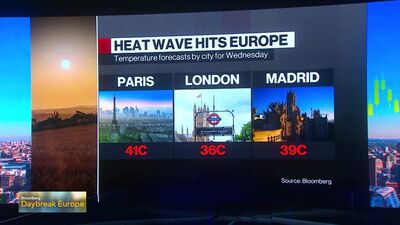
The UK recorded its hottest June day on Wednesday, with daytime highs hitting 36.1C (97F) in Gosport in southern England, according to the Met Office. France’s average daily temperature reached an all-time high of 30C, eclipsing the record set on Tuesday, data from Météo-France show.
The intense heat wave is hitting Europe earlier than usual, underscoring how climate change is reshaping summers on the world’s fastest-warming continent. As the extreme heat strains health services, transport networks and power grids, meteorologists warn of above-normal temperatures for months to come.
London’s efforts to deal with rising temperatures come at a considerable financial cost that will require the city to turn to private investors for help, the mayor of the UK capital said.
“This is an environmental crisis, but also it’s an economic crisis, a public health crisis, and a social justice crisis,” London Mayor Sadiq Khan said in an interview on Thursday. “The costs of inaction outweigh the cost of action, but also we recognize we can’t do this by ourselves from City Hall.”
It’s already clear that even short bursts of high temperatures can leave a major dent in the city’s finances. Heat waves in 2022 — the year Londoners first experienced 40C — cost £1.5 billion ($2 billion), the Mayor’s office said in a report. Around 1 million London homes are at high risk of overheating, it said, and it would cost somewhere between £9 billion and £45 billion to make the most vulnerable homes more resilient.
The London Ambulance Service registered a record number of calls for life-threatening emergencies on Wednesday because of the heat. Emergencies including faintness, shortness of breath and heart issues were also all higher than usual, and overall there were 642 “Category 1” calls – the highest number ever, it said.
The Mayor of London’s report marks the first time the city has set out a plan for dealing with extreme heat in the age of climate change. It details the threats Londoners face from poorly-adapted homes, transport systems, offices and public spaces.
At least 191 million people are forecast to endure temperatures of at least 35C on Sunday in Europe, with the heat particularly intense in Germany, the Czech Republic, Hungary and Poland, according to AFP estimates.
A total of 381 million people in Europe, excluding Turkey, will see temperatures surpass 30C, according to analysis based on forecasts from the German Meteorological Service and 2025 population projections from the Joint Research Centre collated by Austrian NGO Klimadashboard.
Millions of people across the continent are currently “living under extreme heat, hundreds have died, schools are shut, grids are buckling”, Tedros warned.
“Driven by climate change and global warming, the phenomenon of the ‘once-in-a-generation’ heatwave is now occurring nearly annual,” he said, pointing out that “Europe is the fastest-warming continent on Earth, heating at twice the global average”.
The WHO chief said the United Nations health agency was “working with its Member States and partners to address the health threats posed by extreme heat through focusing on preparedness, prevention and stronger health system responses”.
He called on European countries to “implement heat health action plans”, as part of a push to safeguard health in the face of climate change.
Agencies