
There is a visible increase in demand for war risk, political risk and transit insurance. Indian businesses are deeply integrated into global supply chains today. A disruption in one region can delay shipments, increase costs or even close operations entirely. As a result, insurance is moving from being a compliance requirement to a strategic risk management tool.

Sajja Praveen Chowdary, Director, Policybazaar for Business
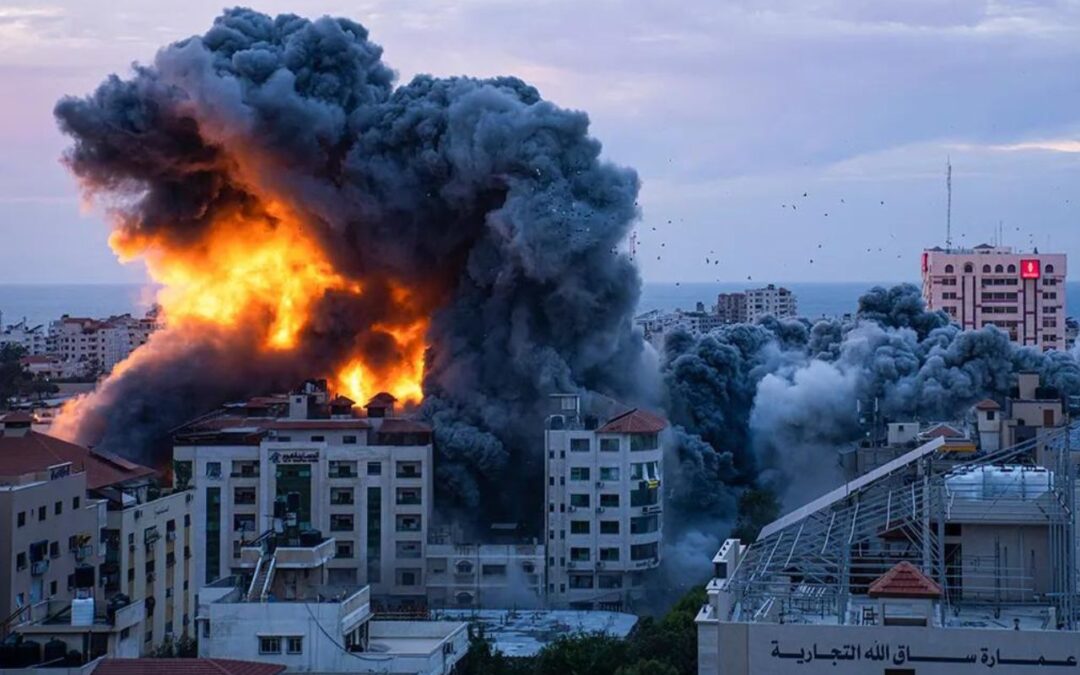
No matter what part of the world you are in, wars are not a distant event anymore that you only read about in the news. The latest US-Israel-Iran flare-up is a reminder that in an interconnected world, distance offers little insulation. Its risk and impact travel from the far end of the world and find a way to reach you. For India, the immediate impact of conflict may be far away, but the aftershocks are visible.
Whether it is the rising crude prices, tighter air corridors, shaken markets, imported inflation or pressure on household budgets, we feel the pinch too.
Even something as ordinary as an LPG refill can begin to reflect events happening thousands of kilometres away. And as always, insurance sits at the centre of this shifting risk landscape. So it is fair to say that we are not just witnessing a geopolitical event, but perhaps a recalibration of risk itself.
Here’s a global roundup of how the war impacts insurance, risk and financial behaviour.
Marine, cargo and hull premiums on a rise
It is natural that when global risks rise, insurance becomes more relevant, and often more expensive as well. The first and most immediate impact of any conflict is visible in marine, cargo and hull insurance. With prolonged closure of the Strait of Hormuz, key trade routes, especially those which are linked to West Asia, are now being seen through a higher risk lens. And insurance companies price risk based on probability and severity. When either of the two increases, premiums rise as well.
What does this mean for businesses? Well, first of all, this means higher costs of transporting goods. But it also means higher insurance costs to insure those goods.
After all, with higher risk, insurance companies would go for tighter underwriting, more exclusions and closer monitoring of exposure. For exporters and importers, especially those operating in or through high-risk regions, war risk covers have become a necessity.
A similar trend is playing out in aviation insurance as well. Airspace restrictions, rerouted flights and geopolitical uncertainty are increasing operational risk for airlines.
This is translating into rising premiums and more cautious underwriting globally. Indian carriers, while relatively insulated in operations, are not completely insulated from pricing.
For instance, due to airlines rerouting US-bound flights to avoid Iranian airspace, it means extra hours of flight time and burning roughly $25,000 extra in fuel per trip, leading to more pressure on the sector overall.
Businesses rethink their risks
What is more interesting, however, is not just the rise in premiums, but the change in behaviour. Mid-sized exporters and SMEs traditionally saw war or political risk as distant concerns.
However, they are now reassessing their exposure. There is a visible increase in demand for war risk, political risk and transit insurance. Indian businesses are deeply integrated into global supply chains today. A disruption in one region can delay shipments, increase costs or even close operations entirely. As a result, insurance is moving from being a compliance requirement to a strategic risk management tool.
The same logic applies to business interruption insurance as well. Traditional policies were designed for localised disruptions like fires, floods, operational shutdowns. But today’s risks are interconnected and cross-border. Just look at what the shortage of LPG has done to the restaurant industry. Many outlets are shutting shop while others have increased prices or have cut down on menu items, which will have a major impact on their balance sheets and their long-term sustainability.
The impact is even seen on food delivery companies. So it is natural for companies to look at more customised covers that align with global dependencies.
Cyber insurance comes into the picture
Modern conflicts are not limited to physical battlefields. They extend into cyberspace, targeting infrastructure, financial systems and corporate networks. Indian companies, especially those with global exposure, are increasingly recognising that geopolitical risk poses cybersecurity risk too. Insurers, in turn, are evolving underwriting models to account for these complex threat landscapes.
Digital warfare is very real now. So is a ‘shadow war’ in cyberspace. In fact, even during Operation Sindoor, Indian power grids and banks reported a surge in probing attempts by foreign entities. Even as cyber insurance takes nascent steps in India, the industry does realise its importance, even more deeply in a war like situation.
The markets feel the heat too.
Where should you park your money?
While businesses respond to operational risks, consumers experience the impact differently. They do it through markets, inflation and financial uncertainty. Geopolitical tensions tend to result in higher volatility across asset classes. Equity markets swing from one extreme to the other while currencies fluctuate, and commodity prices, especially oil, remain unpredictable. In such an environment, investor behaviour shifts.
There is a noticeable move towards stability and downside protection. This is where products like guaranteed return plans are gaining relevance. They offer predictability, something that markets cannot provide. In a portfolio increasingly exposed to global volatility, such instruments act as anchors. Not because they offer the highest returns, but because they offer certainty when everything else is uncertain.
Insurance and financial safety
At the same time, war-driven inflation, particularly in healthcare and essential commodities, is making consumers reassess their insurance coverage. It’s not enough if you have insurance, it’s more important to know if it’s enough.
We are already seeing a shift towards higher sum insured, top-up plans and more comprehensive health coverage. Because when costs rise, underinsurance becomes the biggest risk. Families are upgrading from basic health covers to Super Top-up plans, anticipating that war-induced inflation will double the cost of a hospital stay by 2027.
There is one clear takeaway from the current geopolitical environment, and that risk is becoming more interconnected, more dynamic and less predictable. And insurance is evolving in response. Pricing is becoming more sensitive to global events. Products are becoming more customised and modular.
Consumers are becoming more aware of coverage adequacy. Businesses are integrating insurance into core strategy. Technology and data are playing a larger role in underwriting.
For India, this presents both a challenge and an opportunity. The challenge is to ensure that rising global risks do not translate into reduced access or affordability of protection. The opportunity lies in building a more resilient, transparent and consumer-centric insurance ecosystem that adapts to these new realities.