
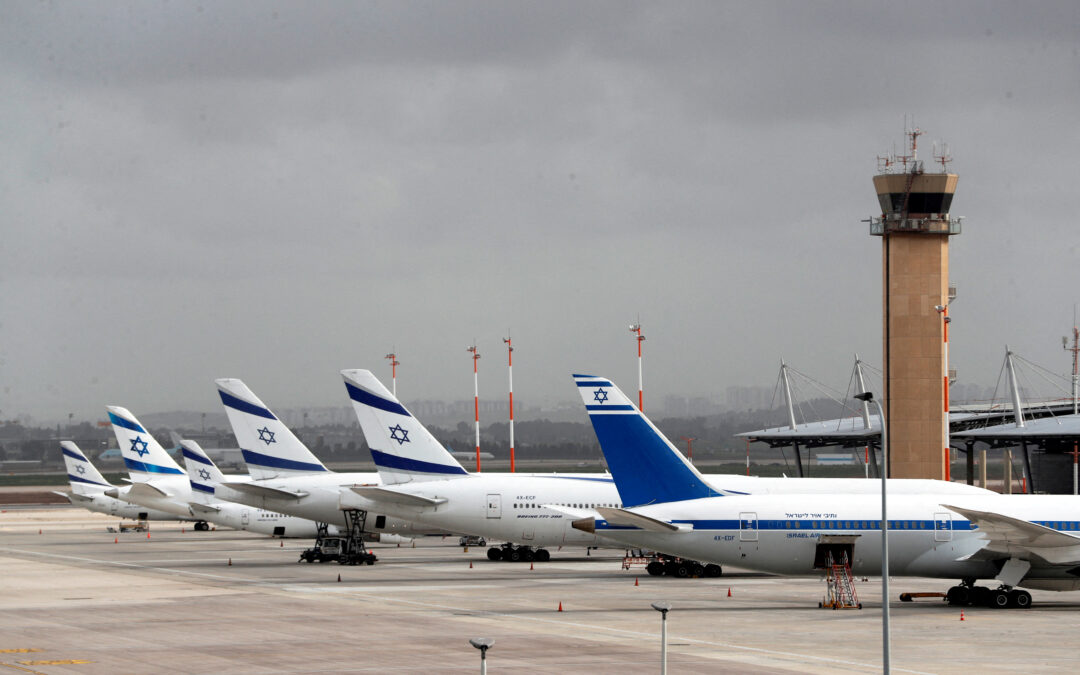
Despite the significant challenges, and elevated war risks for airlines and aviation infrastructure, discussions remained calm and assured, with insurers working closely with brokers and buyers to understand the steps that were being made to mitigate risk and protect passengers, hardware and assets.

Patrick Richardson, Managing Director, Global Aviation & Space, WTW
The Middle East conflict creates both regional and global challenges for the aviation sector. Despite the pressure and the uncertainty, the airline insurance partnership has worked well.
Tensions in the Middle East have inevitably dominated discussions in the airline insurance market since the outbreak of hostilities between the U.S. and Iran.
There are three aspects that need to be taken into account: the operational challenges, the impact of the increased risk on the insurance markets and the wider ramifications for the aviation insurance sector as a whole.
The immediate operational challenges
Immediately following the breakout of hostilities, airlines operating within, into and out of the Middle East cancelled flights and grounded operations. The volatility of the situation caused significant operational disruption, but insurers, brokers and carriers worked closely together to exchange information, understand exposure and ensure that appropriate coverage remained in place.
There was also the challenge of making sure that repatriation flights could go ahead as required. This is always a complicated process, carried out against a background of fast-moving events as embassies attempt to assess how many of their nationals are in the conflict zone and what the best way is to get them out. Again though, insurers, brokers and airlines worked closely to facilitate flights as appropriate.
The specifics are always different, but the insurance sector has a lot of experience in responding to this kind of situation, understanding what the risks are and how they are evolving, and the response to both the crisis and the need for repatriation flights was efficient and appropriate.
Risk remains elevated, but airlines, brokers and insurers have worked together to ensure that there is as much clarity as possible around what has happened and what needs to be done, when and by whom.
It should also be noted at this point that there do not appear to have been any major claims associated with civilian aircraft, despite the reports of military activity across the region, including within and close to commercial airports.
At time of writing, the ceasefire has defused some of the immediate tension, reducing risk and alleviating some of the additional insurance premium charges that were levied on operators within the region. This will be particularly welcome for airlines that are having to navigate lower passenger demand and significantly higher fuel costs[2] for the next few months given the clear impact that hostilities have had on global jet fuel supply.
The increased regional risk
Despite the significant challenges, and elevated war risks for airlines and aviation infrastructure, discussions remained calm and assured, with insurers working closely with brokers and buyers to understand the steps that were being made to mitigate risk and protect passengers, hardware and assets.
The improvement in clarity around the “grip of the peril” doctrine following the 2025 ruling by the High Court of Justice in London, one of the senior courts of England and Wales, may have been a factor in the relatively measured response from insurers in not issuing notices to exclude certain geographic areas despite the fast-moving environment.
Airlines that are active in the region acknowledged the elevated risk with additional premiums being charged to ensure continuity of coverage. Insurers understood that despite the increase in risk, airlines had the correct measures in place and sources of information and intelligence to operate safely.
The global ramifications for aviation and insurance
From an insurance perspective, brokers and underwriters are no longer engaging in person at underwriters’ desks at Lloyd’s in the way they did two decades ago, but all members of the insurance partnership can now interact to a far greater degree in real time. This has meant greater access to intelligence and enhanced understanding of the steps that are being made to reduce and manage risk. In short, there is more information, clear and efficient communication and people involved on all sides of the insurance equation are better informed.
The operational ramifications of the tension in the Middle East are significant from an insurer perspective globally though. Looking at the long-term impact of the current crisis, airline insurance policies are adjustable according to exposure, so the reduction in scheduled flights in the Middle East could mean that underwriters’ earned premium falls in 2026.
Equally, while the risk ramifications are limited to airline operations directly around the sphere of the conflict, the increase in fuel price will be felt acutely by all airlines worldwide. This could make some marginal routes unprofitable for airlines which in turn could put pressure on earned premium for underwriters.
Insurers have been trying to rebalance their premium income levels to maintain profitability against their modelled levels of claims frequency and loss severity, so a reduction in earned premiums will be factored in despite the level of uncertainty for the balance of this year.
Market responses
Drilling down into the individual airline insurance sectors, hull war is likely to see insurers resist the previously soft market conditions through a lens of increased risk and geo-political turmoil. At the start of the decade, prices for hull war insurance had dropped to historically low levels before the outbreak of the Russia/Ukraine conflict caused a significant hardening.
The increases calmed once war risks premium reached what was perceived to be an appropriate level, and new capacity meant that negotiations at the end of 2025 were very competitive. Renewals are relatively thin on the ground during the first half of the year, but indications from the market are that while the dynamics of overcapacity are still in place, the unstable geopolitical landscape will make for robust negotiations as 2026 progresses.
From a hull and liabilities perspective, the increased geopolitical tension has increased perceptions of risk at a challenging point in the market cycle. Capacity remains strong, but airline underwriting was marginal in 2024 and the major claims during 2025 put significant pressure on rating through to the end of the year.
Claims have been relatively limited in 2026 so far, but some insurers have put airline underwriting under significant strategic scrutiny. While it could be argued that hull and liability insurers have limited exposure to the current situation in the Middle East compared to their hull war counterparts, the underlying underwriting results in 2025 will continue to play out in 2026 renewal negotiations and widespread rating increases should be expected.
The other issues
As a result of the challenges that the current situation has put on demand for travel to, from and around the Middle East, some airlines have put some aircraft into long term parking. This might change the dynamic of some of the global supply chain challenges that airframe manufacturers have faced over the last few years, although the reality is that the length of the waiting list for new aircraft is likely to minimise the impact.[4]
Given the rapidly evolving situation, it is difficult to ascertain what the medium/long term ramifications will be on the airline industry regionally or globally. It should be noted that the Middle East has become a major global hub for aviation over the last few years, and governments in the region have invested heavily in travel and tourism to reduce their economic reliance on hydrocarbons. Airlines, meanwhile, have been attracted by modern, efficient infrastructure and relatively low fuel costs.The economic impact of the current crisis will depend on how long the disruption lasts.
Meanwhile, the escalation in the cost of both hull and liability claims over the last few years continues to cause concern in several parts of the world. The major claims in North America in 2025 continue to evolve and reserves could be on the verge of being reassessed and increased.
Insurers are suggesting that they are taking a ‘measured’ approach to rating increases to try and achieve a sustainable market premium without attracting an influx of additional capacity. But competitive forces will still play out in renewal negotiations as insurers look to protect their market share. At this time, it appears that insurers are approaching the need to increase rates and inflate the market premium base relatively consistently.
The changing conditions in the Middle East have had a variety of short-term knock-on impacts on both the aviation industry and the aviation insurance sector, not just in the region, but also further afield. The situation remains dynamic, but the strength of relationships between airlines and their insurance partners has enabled everyone to make decisions in their joint best interests.
Source- WTW