
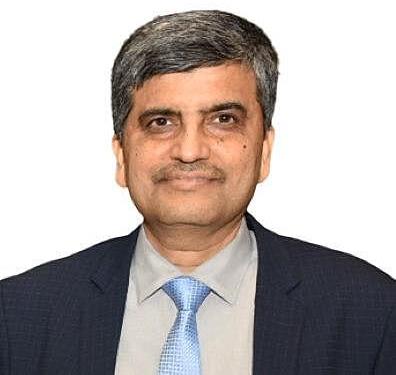
Ajay Seth, chairman, IRDAI
“To my mind, that was the first time an act(The Sabka Bima Sabki Raksha (amendment of Insurance laws) Act, 2025) is talking about transparency in governance of the regulator. Now, that again is an indication of what the Indian Parliament is telling us, that it has to be a well-governed sector, and the regulator’s conduct also has to be fair as well,as transparent’’ Ajay Seth, chairman, IRDAI
Seth further emphasied that the principles based regulations, ensuring larger economic activities, rather than prescription is more suitable for a developing country like India
Mumbai:In a larger message to the Indian insurance industry, Ajay Seth, chairman, IRDAI, said, for the first time in the country, the recently enacted `The Sabka Bima Sabki Raksha (amendment of Insurance laws) Act, 2025,” has enshrined issue of transparency in th governance of any regulator.
“One of the clear objectives of that Act is to facilitate transparency in governance and operations of regulated entities and the regulator. To my mind, that was the first time, an Act is talking about transparency in governance of the regulator. Now, that again is an indication of what the Indian Parliament is telling us, that it has to be a well-governed sector, and the regulator’s conduct also has to be fair as well,as transparent.,’’ said Seth while speaking virtually, on Friday, at an event, to release a report-Regulatory Governance , The Scope- prepared by by Jindal Global University, Jindal Global Law School and Centre for Regulatory Governance.
The second piece of legislation, which is in making is- Securities Market Code Bill, that has been introduced and is being considered by the Parliamentary Committee. This again puts a very good framework how regulations should be made, implemented, how there should be a division of roles and functions within the regulator itself. This piece of legislation, when enacted, will also go a long way in improving governance practices in our country,’’ Seth underlined .
Seth further emphasied that the principles based regulations, ensuring larger economic activities, rather than prescription is more suitable for a developing country like India.
“For ensuring fair usage of public goods and services and modifying behaviour of suppliers, consumers, users. you have to be careful. Should it be through prescription or should it be through nudge? My sense is, or my experience is, the economic incentives or disincentives may be far more effective, especially in a developing country like ours, rather than prescription,’’said Seth
`Of course, the regulators also grapple with issues of allocative efficiency, stability and distribution. Here, again, a dilemma arises that what should be the right balance between prescription and principles. To my mind, an activity which can be reversed if found to be harmful or uneconomical or detrimental to larger economic activities should be largely governed by principles rather than prescription, something which can have a far-reaching impact which cannot be reversed or which can have stability-related concerns,’’ said outlined
Obviously, the economic case for regulations is self-obvious, be it developing market and promoting competition or protecting interest of consumers, including public safety, or ensuring fair market conduct. Obviously, addressing market failures which often gets linked with regulations, but that is not the core purpose. The core purpose is much larger, stressed Seth.
“What should be the objective function of regulation? Option A- should it be maximizing economic activity, subject to zero non-compliance? Or option B- minimizing the non-compliance with rules and regulations, subject to maximum facilitation of economic activities? To my mind, given the country’s growth and development aspirations, India at 78 needs function B more than function A,’’ underlined IRDAI chief.
“In a world which is export constrained, world which is energy constrained, which is climate constrained, and also which is facing plenty of risks, it is very imperative that we maximise domestic levers for our growth. And when we focus on that area, appropriate regulations by way of deregulation in various areas as well as better regulations in others becomes a necessity for all of us’’ suggested Seth.
“In the regulatory world, we quite often jump to how to regulate. But that would be a very,not something which is appropriate for the economy,’’ he cautioned.
Seth pointed out that five questions have to be raised before laying down any regulations.
“First, why? What is the problem? Second, when? The timing for regulation, should it be regulated at the first instance of something going wrong, or there should be enough patience to see something, when something becomes substantive, then regulate. Third, whom to regulate? Which stakeholder in the supply chain or economic activity has the capacity to correct the problem? Fourth, which activity, what to regulate? `And then comes the question is how to regulate. So, this again, as we work towards a faster growth, more sustainable growth, we have to also look at that what kind of questions we asked while framing regulations,’’ explained Seth.
According to Seth, the Jan Vishwas (Amendment of Provisions) Bill, 2026 passed by the Parliament is a structured approach to build trust-based governance and decriminalise and rationalize offenses. This again goes on to smoothen the process of economic activities.
“We talk about deregulation and better regulation. What is the idea of a better regulation? Regulations which are simpler, lighter, and faster. They are key enablers of competitiveness. They rely upon evidence-based decision-making. They achieve their objectives in the most efficient way,’’ highlighted Seth.