
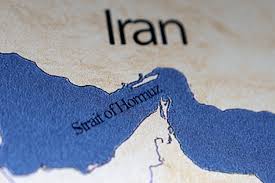
Risks to commercial shipping have surged in the past 24 hours, with more than 200 vessels including oil and liquefied gas tankers dropping anchor around the Strait of Hormuz and surrounding waters, shipping data showed on Sunday.
Mariners should expect increased naval presence, enhanced force protection postures, potential VHF hailing, congestion near anchorage areas outside the Strait, and insurance market volatility
DUBAI/LONDON:At least three tankers were damaged off the Gulf coast after U.S. and Israeli strikes on Iran triggered Iranian retaliation that put merchant ships at risk of collateral damage, shipping sources and officials said on Sunday.
Risks to commercial shipping have surged in the past 24 hours, with more than 200 vessels including oil and liquefied gas tankers dropping anchor around the Strait of Hormuz and surrounding waters, shipping data showed on Sunday.
Iran has said it has closed navigation through the critical waterway.
“The U.S.-Israeli attack on Iran dramatically increases the security risk to ships operating in the Persian Gulf and adjacent waters,” said Jakob Larsen, chief safety and security officer at shipping association BIMCO.
‘SHIPS MAY BE TARGETED DELIBERATELY OR IN ERROR’
“Ships with business connections to U.S. or Israeli interests are more likely to be targeted, but other ships may also be targeted deliberately or in error, ” said Larsen.
Several tanker owners, oil majors and trading houses suspended crude oil, fuel and LNG shipments via the Strait of Hormuz after the attacks and Tehran said it had closed navigation, trading sources said on Saturday.
“At present, no such formal suspension (of traffic through the strait) has been communicated internationally by recognized maritime authorities,” the U.S. Navy-led Joint Maritime Information Center said in a note on Saturday.
“Mariners should expect increased naval presence, enhanced force protection postures, potential VHF hailing, congestion near anchorage areas outside the Strait, and insurance market volatility.”
A Palau-flagged oil tanker under U.S. sanctions was hit on Sunday off Oman’s Musandam peninsula, injuring four people, the country’s maritime security centre said without specifying what hit the vessel.
The Marshall Islands-flagged crude oil tanker MKD VYOM was hit by a projectile off the coast of Oman while sailing with a cargo, two maritime security sources said on Sunday.
The vessel was hit 44.4 nautical miles northwest of Muscat, one of the sources said.
British maritime agency UKMTO said that a laden merchant vessel reported an explosion in the same location.
A separate tanker in the United Arab Emirates port of Jebel Ali was almost damaged by falling debris from an aerial interception after overnight Iranian attacks targeting Gulf states, maritime security sources said.
A third oil-bunkering tanker was damaged off the UAE coast, two shipping sources said.
Vessels were recommended to keep clear of the Strait of Hormuz and wider Gulf of Oman because of the risk of retaliatory strikes by Iran, the U.S. transport ministry’s Maritime Administration said in a note on Saturday.
At least 150 tankers, including crude and LNG vessels, dropped anchor in open Gulf waters beyond the Strait of Hormuz and dozens more were stationary on the other side of the chokepoint, shipping data showed on Sunday, after U.S. and Israeli strikes on Iran plunged the region into turmoil.
The tankers were clustered in open waters off the coasts of major Gulf oil producers, including Iraq and Saudi Arabia, as well as liquefied natural gas giant Qatar, according to Reuters estimates based on ship-tracking data from the MarineTraffic platform.
Many of the vessels were stationary within exclusive economic zones (EEZ) of the key Gulf countries, including Kuwait and the United Arab Emirates, according to MarineTraffic data.
An EEZ extends up to 24 miles and beyond local territorial limits of 12 nautical miles.
Dozens of cargo ships were separately clustered across various EEZs, the data showed.
Some 20% of global oil, including from producers Saudi Arabia, the United Arab Emirates, Iraq, Kuwait and Iran, passes through Hormuz, along with large volumes of LNG from Qatar.
In addition, at least another 100 tankers were anchored outside of the strait, along the UAE and Omani coasts and anchorage points as well as dozens of cargo ships, according to the data.
Reuters