
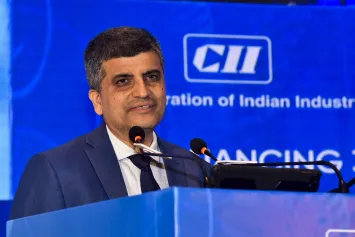
Ajay Seth, chairman,IRDAI
`While the number of health insurance claims settled is high, the amount settled especially in full is sometimes lower than expected.This is an area we are monitoring closely. Our expectation from the insurers is clear. Prompt, fair and transparent claim settlement. Anything less weakens the trust on which our industry is built. There is still some distance to cover. Despite this progress, we must be candid about the gaps that remain. We are pushing forward on several fronts on the reforms and charting out the road ahead,” Ajay Seth, chairman,IRDAI
Indian insurance sector collected premiums of over Rs 11.93 lakh crore in FY 25. Of this, life insurance accounted for nearly Rs 8.86 lakh crore and rest have been contributed by general insurance including health
Hyderabad: Describing claims as the the moment of truth in any insurance journey, IRDAI chairman Ajay Seth has said the regulator continues to see the gaps in the Indian health insurance space.
“While the number of claims settled is high, the amount settled especially in full is sometimes lower than expected.This is an area we are monitoring closely. Our expectation from the insurers is clear. Prompt, fair and transparent claim settlement. Anything less weakens the trust on which our industry is built. There is still some distance to cover. Despite this progress, we must be candid about the gaps that remain. We are pushing forward on several fronts on the reforms and charting out the road ahead, said Seth, speaking at the BimaLokpal Day on Tuesday.
During FY25, general and health insurers have settled 3.26 crore health insurance claims and paid Rs 94,247 crore towards the settlement of health insurance claims, he revealed.
`Equally important, insurers honoured claims worth nearly Rs 8.36 lakh crore in financial year 2024-25, a clear signal that this system is not just collecting premiums but also delivering on its promises when it matters most,” said Seth
In financial year 2024-25, the insurance sector collected premiums of over Rs 11.93 lakh crore. Of this, life insurance accounted for nearly Rs 8.86 lakh crore, with general insurance and health insurance contributing the rest.
“Insurance penetration continues to remain low, though expanding, but the number of people in the insurance fold needs to grow faster. This suggests we must do more to deepen the reach of insurance, especially in underserved rural areas, among informal sector workers and among women. In a country as vast and diverse as ours, we need faster progress to meet the vision of Insurance for All by 2047,” he said.
Speaking on reforms and the road ahead, Seth said IRDAI is pushing forward on several fronts.
One, expanding digital access to make buying, servicing and claiming more convenient. Second, promoting innovation by giving insurers greater flexibility in product design. Third, encouraging micro insurance and inclusive models that reach the entire country.
Fourth, emphasizing simplicity in communication because insurance must be understood before it can be trusted.
“We are also refining our regulatory approach to be both facilitative and firm, easing the path for good players while holding all accountable to high standards. Insurance is not a transaction, it is a relationship. A relationship built on faith, serviced with empathy and honoured with integrity. To the insurers, let us never lose sight of the people behind the policies,” Seth stressed.
“Our aim must not just be to resolve complaints but to prevent them. That is where good governance, transparent communication and responsible selling practices come in. In the past year, 2.57 lakh policyholder grievances were registered through our BIMA Barosa platform.Encouragingly, the vast majority of these were resolved. The industry’s resolution rate stands above 99%, but we must not let comfort with averages make us complacent,” underlined IRDAI chief.
Complaints to ombudsman rose in 2023-24 from 52,300 in financial year 22-23 to 53,230 in financial year 23-24, indicating growing awareness, utilization and faith in the insurance ombudsman framework. Out of the complaints received, 54% pertain to the health insurance sector. Around 33,000 hearings were held during the year, mostly online for recommendations and awards.
“Online registration of complaints also improved substantially.We are committed to strengthening its reach, efficiency and visibility in the coming years so that every policyholder, regardless of location or literacy, knows that they have a platform to turn to,” said Seth.
Alongside complaint resolution, it will also be useful to undertake analysis of grievances, which will give insights into trends and patterns. Early warning signals can be detected through predictive analysis. Insurance companies can make use of such precious insights and take preemptive measures to reduce the incidence of complaints, suggested Seth.
One of the major challenges today before the insurance ombudsman is the steady rise in the volume of complaints. With the insurance sector in an accelerated growth path, the volumes will keep growing. Along with higher levels of technology adoption by the insurance ombudsman system, proactive steps to curb incidence of complaints need to be taken by insurance companies.
The internal grievance redressal system of the insurance companies needs to be robust, responsive and reassuring.
“I would request all insurance companies to periodically review the efficiency of their grievance redressal mechanism and make necessary changes as and when required. Feedback from insurance ombudsman can be a valuable input for this exercise,” observed Seth.
Surveys can be conducted to assess the knowledge of the policyholders regarding availability of these mechanisms. Ways and means to simplify the process of filing complaint also needs to be explored, pointed out Seth.
“In order to realize our vision for insurance for all by 2047, it is very important to ensure fair treatment to the policyholders, proper disclosures of the facts, responsible business conduct by insurers and intermediaries, objective and adequate advice to the policyholders, production of assets and data including from fraud and abuse, adequate complaints handling and redressal mechanisms,” he explained.
The area where IRDA should focus is mainly in educating the policy holders about the coverage given, procedure to adopt in case of a claim and responding to their queries.
Many of them, mostly senior citizens are finding it difficult to follow up their claims.
Can think of providing claim coordinators to service Health Insurance claims of any Insurance provider.