
The proposed changes to the Amended 2015 Rules make it clear that...
Category:
Articles
Latest
Cyber Insurance: Ransomware remains biggest driver of claims
``Asian businesses with overseas presence should also consider...
Heat, Air Quality & Insurance Costs: How climate change is affecting our homes – and our health
Ang Li, Melbourne School of Population and Global This year, ten...
India’s Population Puzzle
While India will be a young country for decades yet, it is aging faster than expected.The latest round of India’s massive National Family Health Survey underscores the point. Mihir Sharma By the middle of this century, India will have 1.6 billion people. That’s when...
Future of Digital Payments in India
According to RBI, 'while the guidelines will be technology and platform agnostic, it will create an enhanced and enabling environment for customers to use digital payment products in a more safe and secure manner.' The digital payments growth in India has positioned...
Volatile markets, US lawsuits, ESG issues and SPACs create new risks for managers:Allianz
“The actions and culture of organizations and their directors and officers are coming under heightened scrutiny from a wide range of stakeholders, with litigation risk a primary concern,” says Shanil Williams, Global Head of Financial Lines at AGCS London/New...
What the PM Modi Twitter breach tells us about hackers
The world might not be so lucky next time. A few hacks of Twitter has proven to the rest of the community that this is a target with vulnerabilities, and others — possibly with state backing or terrorist links — will think of better ways to abuse that weakness than...
More than half a billion pushed into extreme poverty due to health costs:World Bank
In 2019, prior to the pandemic, 68 per cent of the world’s population was covered by essential health services, such as reproductive health services; immunization services; treatment for HIV, TB and malaria; and services to diagnose and treat noncommunicable diseases...
Land and water ecosystems, ‘stressed to a critical point’
If the world keeps to the current trajectory, producing the additional 50 per cent more food needed, could mean an increase of 35 per cent, in the water withdrawals needed for farming That could create environmental disasters, increase competition for resources, and...
Omicron! Why it’s too soon to panic about COVID vaccines and the new variant
Currently fewer than 200 genetic sequences of Omicron have been compiled compared with more than 2.8 million Delta sequences. Delta remains the most dominant variant. So we should continue to use vaccines and therapies we know work against Delta. By Adam Taylor, Early...
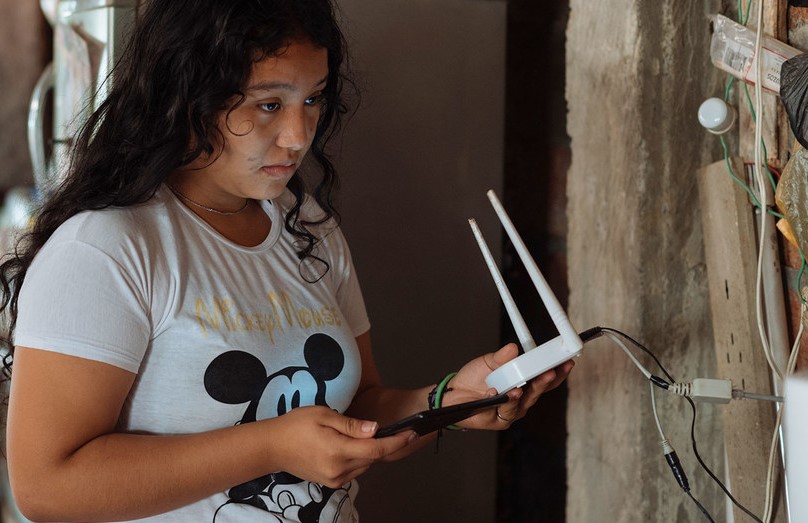
Despite COVID-19 connectivity boost, world’s poorest left far behind
``While almost two-thirds of the world's population is now online, there is a lot more to do to get everyone connected to the Internet," Houlin Zhao, ITU Secretary-General said. Some 2.9 billion people still have never used the internet, and 96 per cent live in...
iNDIA’S resilient cOVID-19 PANDEMIC strategies
The South Asian nation is now ranked twenty sixth in the month-to-month snapshot, which measures the place the virus is being dealt with the most successfully with the least social and financial upheaval. The league desk assesses 53 main economies on 12 data points...
Construction companies to see robust growth and “new age” risks post-Covid:ALLIANZ
“Covid-19 has brought about a new age for the construction industry,” says Yann Dreyer, Global Practice Group Leader for Construction in the global Energy & Construction team at AGCS. “While construction projects continued during the pandemic, and further growth...