
Worldwide, the average cost of a data breach reached an all-time...
Category:
Workplace/Employee Benefits
Latest
Green Banking: RBI to create Reserve Bank Climate Risk Information System
``Climate change is emerging as a significant risk to the financial...
No digital labour platform perfect to ensure gig workers’ welfare in India: Report
The report by Bengaluru-based Fairwork India, spearheaded by the...
Omicron variant: Ajit Pawar calls meeting to review COVID situation in Maharashtra
Health Secretary Rajesh Bhushan, in a letter on Thursday to health secretaries of all states and Union Territories, said: "lt has now been reported by National Centre for Disease Control (NCDC) that multiple cases of a COVID-19 variant B.1.1.529 have been reported in...
Global AI software market to hit $62 billion in 2022, says Gartner
The top five use cases for AI software spending in 2022 will be knowledge management, virtual assistants, autonomous vehicles, digital workplace and crowdsourced data. Global artificial intelligence (AI) software revenue is forecast to reach $62.5 billion in 2022, an...
New York declares State of Emergency amid spike in Covid-19 infection
The state of emergency amid concerns over the new Omicron coronavirus variant detected in southern Africa. The United States, the United Kingdom, Canada, and many European countries imposed new restrictions on foreign nationals travelling from countries in the region...
Delhi govt transfers Rs 5,000 each to accounts of 2.95 lakh construction workers
Construction activities have been banned in Delhi but the city government will assist the labour brothers and sisters in every possible way, Delhi's Deputy Chief Minister Manish Sisodia said New Delhi: The Delhi government on Saturday deposited Rs 5,000 each in the...
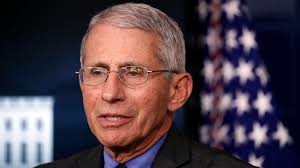
micron variant in ‘fluid motion’:Dr Anthony Fauci
Dr Anthony Fauci, America's top infectious disease expert On whether the new variant evades antibodies, Fauci explained, "when you look at a mutation it is going to give you a hint or indication that it might evade the immune response. You need to get that particular...
Explainer: How worried should we be about the Omicron variant?
Omicron's mutations are likely to render certain COVID-19 treatments - including some manufactured antibodies - ineffective, said Dr. David Ho, professor of microbiology and immunology at Columbia University. Experimental antiviral pills - such as Pfizer Inc's...

PM Modi orders review of reopening on Omicron COVID concerns
Prime minister Narendra Modi After the World Health Organization (WHO) declared the new variant to be "of concern", Modi "highlighted the need for monitoring all international arrivals, their testing as per guidelines, with a specific focus on countries, identified...
India to allow regular international flights from Dec 15,restricted flights from ‘at-risk’ countries
As per the latest update, the Health Ministry has put countries in Europe, including the United Kingdom, and South Africa, Brazil, Bangladesh, Botswana, China, Mauritius, New Zealand, Zimbabwe, Singapore, Hong Kong and Israel under the ‘at-risk’ category. New Delhi:...
World races to contain new COVID threat, the omicron variant
"This variant has a large number of mutations, some of which are concerning. Preliminary evidence suggests an increased risk of reinfection with this variant, as compared to other VOCs. The number of cases of this variant appears to be increasing in almost all...
Sebi asks RTAs to publish investor charter, disclose complaint data on websites
Also, Sebi asked stock exchanges, depositories and clearing corporations to disclose on their websites the data on complaints received against them and redressal thereof. This came after the Securities and Exchange Board of India (Sebi) came out with investor charter...