
After two weeks of number-crunching, it now seems clear that...
Category:
Workplace/Employee Benefits
Latest
Singapore lawmakers amend bill to stop Allianz’s insurance deal
The move comes two days after the government — in a rare move —...
Star Health confirms data breach, Hacker ‘selling 57.5 lakh insurance premium records for $150K
“We acknowledge that we were the victim of a targeted malicious...
Omicron poses “very high” global risk, world must prepare -WHO
"The overall global risk related to the new variant …is assessed as very high." To date, no deaths linked to Omicron had been reported, though further research was needed to assess Omicron's potential to escape protection against immunity induced by vaccines and...
Pandemic hits Profitability of life insurers in Q1 FY2022, New Business to resume growth in H2 FY2022:Icra
While the profitability for select private players remains at similar levels in FY2021 with PAT of Rs. 59.6 billion (Rs. 55.4 billion in FY2020), the median ROE for select private players had been declining since FY2018 due to losses at certain smaller players, and a...
Willis Towers Watson appoints Ben MacCarthy as Head of Casualty Asia
Luke Ware, Head of Corporate Risk and Broking Asia, added: “Casualty risks are constantly evolving and growing in number, scope and complexity. With his background and knowledge, Ben is well positioned to take this key aspect of our business forward, delivering...
COVID ‘Omicron’ variant: Centre advises States, UTs to enhance genomic surveillance of incoming passengers from ‘at risk’ countries
India has categorized 16 countries including some in Europe in "at-risk" category.The countries include the UK, France, Germany, Netherlands, Finland, South Africa, Brazil, Bangladesh, Botswana, China, Mauritius, New Zealand, Zimbabwe, Singapore, Hong Kong and Israel....
Spread of Omicron variant forces nations to rethink plans for global travel
Potentially more contagious than previous variants, Omicron has now been detected in Australia, Belgium, Botswana, Britain, Canada, Denmark, France, Germany, Hong Kong, Israel, Italy, the Netherlands and South Africa. Asian markets and oil prices regained some...
WHO reaches draft consensus on future pandemic treaty
A global agreement to strengthen pandemic prevention and responses, expected to be ready in May 2024, would cover issues such as sharing of data and genome sequences of emerging viruses, and of any potential vaccines and drugs derived from research. Member states of...
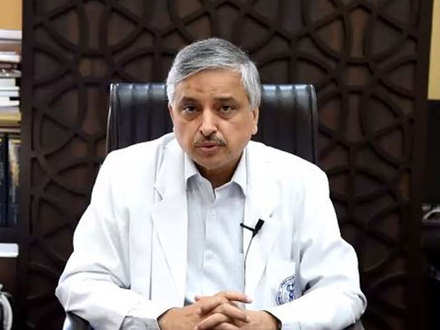
Omicron reportedly has 30+ mutations in spike protein region, may bypass vaccines: AIIMS chief
AIIMS chief Dr Randeep Guleria The future course of action will depend on what more data on its transmissibility, virulence and immunoescpae shows, AIIMS chief Dr Randeep Guleria said. The Indian SARS-CoV-2 Genomic Consortia INSACOG is closely tracking the new variant...
India leading way in world of start-ups, says PM Modi
Indian Prime Minister Narendra Modi "This is the era of start-ups and it is also true that today India is leading the way in the world of start-ups. Start-ups here are getting record investments year after year. This sector is progressing very fast. In just 10 months,...
Study reveals meditation strengthens mental health
"People's interest in meditation and mindfulness is outpacing what science can prove in terms of effects and benefits," said Jeff Lin, MSU psychology doctoral candidate and study co-author. A recent study by the Michigan State University has found that if you're...

Crucial that State provides subsidy for diabetic care: CJI
Chief Justice of India N V Ramana “The human cost is immense. The economic cost to the nation is immeasurable. Therefore, it is essential that the State provides support and subsidy for diabetic care. The government also needs to train and introduce more healthcare...