
The oversight body of the world’s forum for banking regulators met...
Category:
Banking & Bancassurance
Latest
Fed leaves rates unchanged, cites rising risk of higher inflation and unemployment
Fed Chair Jerome Powell "Uncertainty about the economic outlook has...
Banks tighten cyber security network to ward off any threat
"We have strengthened the cyber security mechanism… we have created...
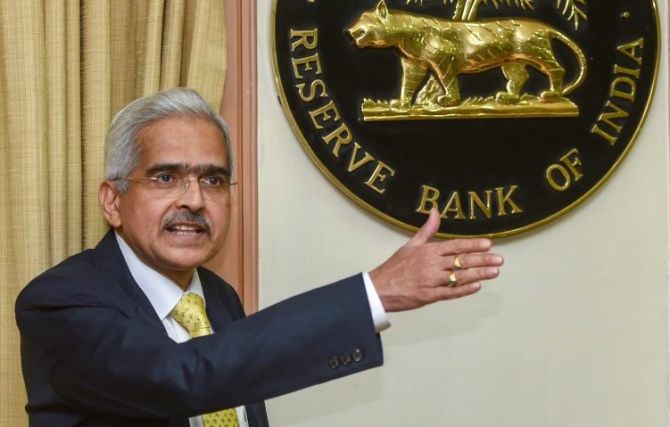
RBI leaves rates unchanged,continues accommodative stance
Shaktikanta Das, governor, RBI The RBI's monetary policy committee held the lending rate, or the repo rate, at 4%. The reverse repo rate, or the key borrowing rate, was also maintained at 3.35% RBI governor Das said that the Indian economy is relatively...
Over 55% PMJDY account holders are women, says Finance Ministry
There are as many as 43.90 crore beneficiaries of the PMJDY account holders in the country as of November 17, 2021, Minister of State for Finance Bhagwat Karad said in a written reply in the Lok Sabha. Of these, as many as 24.42 crore are female beneficiaries as...
PSBs restructure over Rs 58,500 cr loan advanced to 9.8 lakh MSME accounts amid pandemic: Govt
While, as many as 8.5 lakh accounts of individual borrowers of over Rs 60,000 crore have also been restructured New Delhi:Public sector banks (PSBs) effected restructuring of 9.8 lakh accounts of micro, small and medium enterprises, due to the impact of Covid-19...

No proposal to merge public sector general insurance companies: MoS Karad
Minister of State for Finance Bhagwat K Karad In a written reply to the Rajya Sabha, Minister of State for Finance Bhagwat K Karad said there is no proposal under consideration of the government at present for merger of public sector general insurance companies. New...
DBS Bank India introduces an industry-first digital & paperless trade financing solution
The bank now digitally validates the e-Way Bill (i.e. proof of movement of goods) for the purpose of establishing the genuineness of underlying trade transactions. The adoption of this approach has enabled DBS to process transactions quicker without the need to obtain...
Rs 26,697 cr lying in dormant accounts of banks: Sitharaman
As per information received from the Reserve Bank of India (RBI), as on December 31, 2020, the total number of such accounts in Scheduled Commercial Banks (SCBs) was 8,13,34,849 and the amount of deposits in such accounts was Rs 24,356 crore, Sitharaman said in a...
Over 12k depositors of B’luru-based coop bank receive deposit insurance cover of Rs 401 cr
DICGC has paid the claims of up to Rs 5 lakh without deducting the Rs 1 lakh already paid by the bank and also up to Rs 5 lakh paid by the bank for treatment of critical illness Last year, the government brought cooperative banks under the purview of the RBI by...
LIC to up stake in Kotak to nearly 10 pc
''Kotak Mahindra Bank has received an intimation from Life Insurance Corporation of India (LIC) stating that the Reserve Bank of India had granted its approval to LIC, for increasing its holding in the bank up to 9.99 per cent of the paid-up equity share capital of...

RBI may increase minimum capital for a new universal bank to Rs 1,000 crore, no corporate ownership of banks
Bajaj Group, Piramal Group and Reliance Industries had shown interest in expanding into banking, Mumbai: India's central bank said on Friday it would reform rules on the structure of private sector banks but a source familiar with the matter said the changes would not...
Generali enters exclusive talks to buy Credit Agricole’s La Medical
Italian major Assicurazioni Generali SpA entered into exclusive talks with French banking major Credit Agricole CAGR.PA to buy the bank's health insurance unit La Medicale, both companies said in a joint statement on Wednesday. Generali would also buy the...