
The package includes direct aid for households, self-employed...
Category:
Disaster & Management
Latest
Deadly Spain floods show difficulty of adapting to intense rains
An extremely hot Mediterranean and warmer air temperatures...
Infants, older adults in India exposed to more heatwave days in last decade, Lancet report reveals
Estimating economic impacts of heat in India, the report found that...
Typhoon Rai weakens after pummelling central Philippines
Rai, which at one point intensified into a category 5 storm, the highest classification, toppled power and communication lines, complicating disaster response and efforts to collect information from typhoon-hit areas "It is not expected to cause massive damage...
AIIB to fund $150 million for making Chennai’s urban services green and resilient
Chennai faces tremendous infrastructure deficits and low service quality in core urban sectors such as water resource management, water supply and sanitation, urban mobility, solid waste management and public health Beijing: AIIB has approved the USD150-million...
Powerful quake strikes Indonesia; residents flee into streets
Alfons Hada Betan, head of East Flores Disaster Mitigation agency in Larantuka said there were no immediate reports of damage and the quake was felt for several minutes as people fled from their homes.People said on social media the earthquake was also felt strongly...
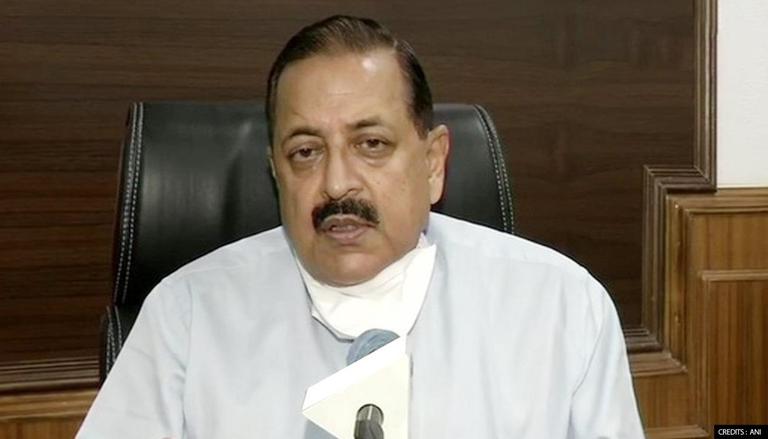
India to provide technical support on disaster resilience of infrastructure systems to 58 Small Island Developing States: Govt
Jitendra Singh,union minister of state (Independent Charge) Science & Technology India, UK, Australia, Fiji, Jamaica and Mauritius jointly launched an initiative, Infrastructure for Resilient Island States (IRIS) to provide technical support on disaster resilience...
Next pandemic could be more lethal than Covid, says Oxford vaccine creator
While the Covid-19 crisis is not over yet with the new super mutant Omicron spreading to 38 countries, the next pandemic could be even more lethal, said the creator of the Oxford/AstraZeneca vaccine Professor Sarah Gilbert. Delivering the 44th Richard Dimbleby...
Indonesia Semeru volcanic eruption kills 13; dozens injured
Semeru, the tallest mountain on Java island, threw up towers of ash and hot clouds on Saturday that blanketed nearby villages in East Java province and sent people fleeing in panic. The eruption severed a strategic bridge connecting two areas in the nearby district of...
Govt prepares for evacuation as cyclone is likely to reach Odisha coast on Dec 4
South Odisha districts may also experience heavy rainfall on December 3," India Meteorological Department director general Mrutunjay Mohapatra said. The forecast said that the low pressure area in south Andaman Sea will intensify into a depression and move towards the...
Agri crops in 50.40 lakh hectare hit due to heavy rains & floods so far this year: Tomar
As per the data placed before the Lower House, Karnataka has reported a crop damage in maximum area of 13.98 lakh hectare as of November 25, followed by West Bengal (6.90 lakh hectare), Rajasthan (6.79 lakh hectare), Bihar (5.80 lakh hectare), Maharashtra (4.55 lakh...
Cyclonic storm likely to hit Odisha, Andhra coasts Saturday morning: IMD
The Met office predicted "heavy to very heavy rainfall and extremely heavy falls" at isolated places over coastal Odisha and "heavy to very heavy" rainfall at isolated places over adjoining interior districts of Odisha, coastal districts of West Bengal and north...
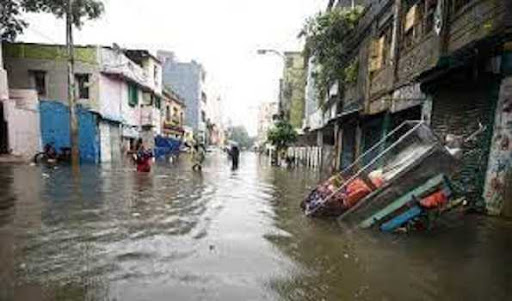
Rains batter TN showers in Chennai one of the most intense in 200 years says CM
Following inspections amid showers, Stalin tweeted saying that in the past 200 years, "this is the fourth time Chennai recorded 1,000 MM (100 CM) rainfall in a single month." Chief Minister M K Stalin quoted experts. Chennai: Chennai: Monsoon rains continued to batter...