
The group said in a statement Germany was not complying with the...
Category:
Climate, Environment, Renewable Energy
Latest
New Global Climate ‘Loss and Damage’ Fund names first director
Ibrahima Cheikh Diong,director-designate,The Fund for Responding to...
Nearly 50% of public infrastructure unprepared for disaster management: CBRE survey
"Floods, extreme temperatures, and cyclones have become more common...
Adani to invest $70 bn in renewable energy, produce cheapest hydroge
India also announced a slew of other, more ambitious, climate targets for 2030: increasing the share of renewables in the country's energy mix to 50 per cent; expanding installed capacity of non-fossil energy from 450 to 500 GW; and reducing the carbon intensity of...
Risky business: Climate change turns up the heat on insurers, policyholders
Given the momentum, it is no surprise that traditional models cannot keep up, Bruce Carnegie-Brown, chairman of insurance market Lloyd's of London told Reuters. "If you’ve reached an exponential part of the curve where suddenly, something’s accelerating, it’s almost...
Six major carmakers agree to phase out fossil-fuel vehicles by 2040, UK says
Cars, trucks, ships, buses and planes account for about a quarter of all global carbon emissions, data from the International Energy Agency showed, of which the bulk comes from road vehicles. GLASGOW: Six major automakers on Wednesday will commit to phasing out the...
Heat waves kill thousands of Indians every decade
Heat waves kill thousands of people every decade. Ahmedabad, a city in the western state of Gujarat, lost more than 1,300 people in 2010 when temperatures hit 47 degrees Celsius. In India’s desert state of Rajasthan, where temperatures frequently reach 40 degrees...
New framework for climate-vulnerable countries reengineers approach to financing nat cat response
The framework is adaptable and scalable across multiple developing countries to address climate-exacerbated natural hazards and weather perils including drought, flooding tropical cyclones, convection storms, and wildfire London: The Insurance Task Force (ITF) as part...
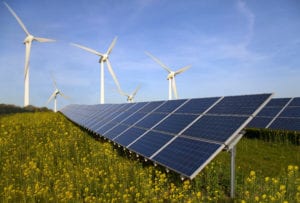
India’s decarbonization journey poses $15 trillion economic opportunity by 2070, says report
The five pillars -- energy, mobility, industry, infrastructure and cities, and agriculture -- contribute to over 90 per cent of India's greenhouse gas emissions, it said, adding India will need to address these pillars, alongside four cross-sectoral enablers, as part...
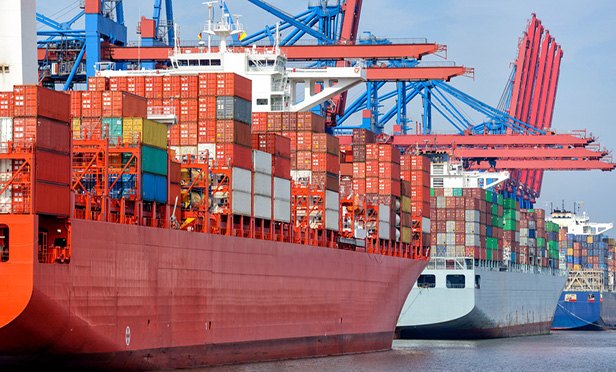
Shipping emissions must fall by a third by 2030 and reach zero before 2050 – new research
International shipping is a crucial part of the global economy — 90 per cent of the world’s trade is transported by sea. But almost all ships use fossil fuels and so the sector is also a major emitter of greenhouse gas pollution — with emissions roughly on a level...
PM Modi launches ‘Infrastructure for Resilient Island States’ for most vulnerable countries impacted by climate change
Glasgow: India on Tuesday launched an ambitious initiative for developing the infrastructure of small island nations, with Prime Minister Narendra Modi saying it will give a new hope, a new confidence and satisfaction of doing something for the most vulnerable...
Flood-prone Mumbai digs in to tackle warming-worsened ‘monsoon mayhem’
Mumbai is part of the C40 Cities network, a group of nearly 100 major cities globally working to drive faster action on climate change. Each has committed to delivering a climate action plan designed to spur uptake of clean energy, boost adaptation to climate shifts and turn the 2015 Paris Agreement on climate change into an on-the-ground reality.
Mumbai launched its first Climate Action Plan (known as MCAP) this month. Amid dire predictions that large parts of the city could face inundation by 2050, it brings together different arms of the administration to try to fast-track solutions.
AIIB increases Green Public Rail Transport options in India,$356.67 million approved to expand Chennai metro system
The project’s design and construction will have environmentally friendly features to help reduce its carbon footprint. In addition to solar panels installed on the roofs of the elevated stations, the project will have dedicated spaces for bicycles and green vehicles, and signage to raise environmental awareness. The project also integrates climate change resilience features to reduce its vulnerability to climate-related events.