
Hima Kohli, Retired Supreme Court judge Justice "There is a...
Category:
Climate, Environment, Renewable Energy
Latest
Audit bodies must address growing risks of privacy breaches, social exclusion: CAG Murmu
Girish Chandra Murmu, Comptroller and Auditor General of India...
Thousands of fires are burning in the drought-wracked Amazon
Climatologists have warned for decades that events like this year’s...
Delhi pollution: SC asks Centre, states to take decisions to stop non-essential construction transport, power plants
"We direct the government of India, NCR states to examine introducing work from home for employees," the bench said. NEW DELHI: The Supreme Court on Monday directed the Centre to call an emergency meeting on Tuesday to take measures like stopping non-essential...
What’s in the Glasgow Climate Pact? Five majors outcomes
Nearly 200 nations agreed to adopt the Glasgow Climate Pact on Saturday after more than two weeks of intense negotiations, with the UK host of the talks saying the deal would keep alive international hopes of averting the worst impacts of global warming. Failure to...

UN chief says outcome of COP26 ‘not enough’
UN Secretary-General Antonio Guterres UN Secretary-General Antonio Guterres said COP26 created some building blocks for progress: commitments to end deforestation, to drastically reduce methane emissions, to mobilize private finance around net-zero emissions.And the...
Globally institutional investors placing greater emphasis on companies’ ESG performance: Survey
''It's clear that the COVID-19 pandemic has spurred investors to place more emphasis on ESG performance. There are positive signs that this is starting to translate into action, although both companies and investors need to take bolder steps to put ESG performance...
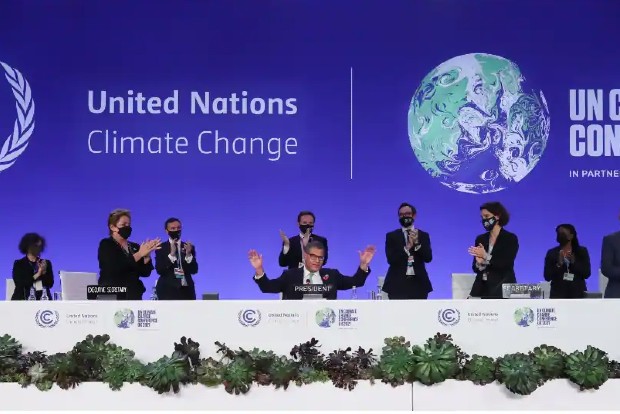
Nations reach climate agreement, accept India’s stand on “phasing down” coal use
Ahead of the Glasgow talks, the United Nations had set three criteria for success, and none of them were achieved. The U.N.’s criteria included pledges to cut carbon dioxide emissions in half by 2030, $100 billion in financial aid from rich nations to poor, and...
Out of time: Climate talks go past deadline over coal, cash
A crunch issue is the question of financial aid for poor countries to cope with climate change. Rich nations failed to provide them with USD 100 billion annually by 2020, as agreed, causing considerable anger among developing countries going into the talks. Scientists...

It is an emergency situation: SC on air pollution in Delhi-NCR
The top court asked the authorities to take immediate measures such as stopping vehicles or imposing a lockdown in Delhi. Solicitor General Tushar Mehta, appearing for the Centre, said there is stubble burning in Punjab. New Delhi: The Supreme Court on Saturday termed...
India-led International Solar Alliance signs UN pact at COP26 in Glasgow
The agreement will also lend support to developing country stakeholders, including Small Island Nations (SIDs) and Least Developed Countries (LDCs), in accelerating the adoption of policy options and approaches for decarbonisation technologies. London:The India-led...
APEC leaders vow to tackle economic recovery, COVID-19, climate
The summit of the Pacific Rim countries came amid heightened regional trade and geopolitical tensions, particularly between China and the United States, and global efforts to tackle the pandemic and the climate crisis Leaders of the Asia-Pacific Economic Cooperation...
Over 84 million people displaced from their homes owing to violence, insecurity, climate change
A lethal mix of conflict, COVID-19, poverty, food insecurity and the climate emergency has compounded the humanitarian plight of the displaced, most of whom are being hosted in developing regions. "The effects of climate change are exacerbating existing...